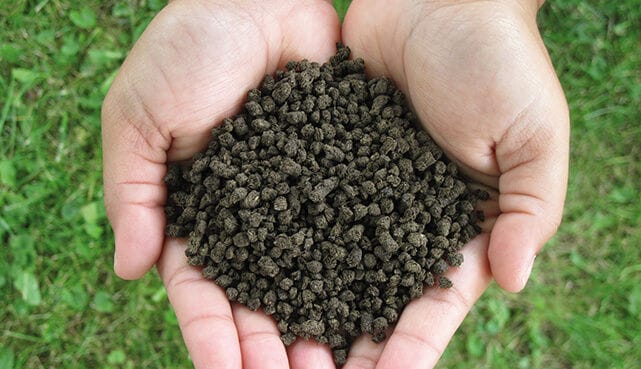

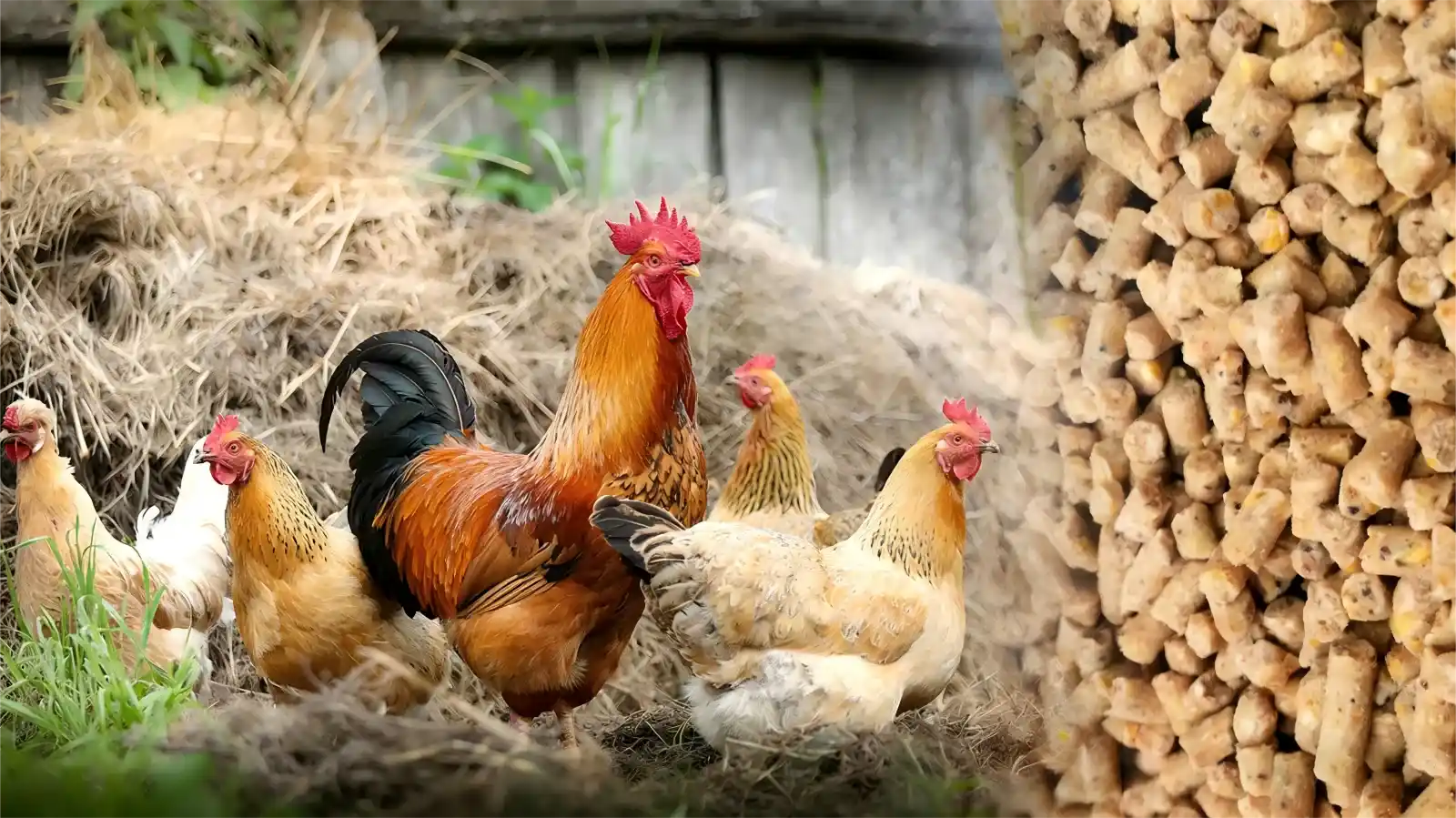
Chicken feed production is not based on a single universal formula. Different chickens have different nutritional requirements depending on their age, growth stage, production purpose, breed, and feeding management system. Broiler starter feed, broiler finisher feed, layer feed, chick feed, and breeder feed can contain different proportions of grains, protein sources, fiber, minerals, vitamins, oils, and other functional ingredients.
These differences create challenges for feed manufacturers. A production line must not only produce different formulas but also process them consistently. Changes in raw material composition can affect grinding, mixing, conditioning, pellet formation, cooling, screening, and packaging.
Modern chicken feed pellet technology is designed to handle these variations by combining accurate formulation, automatic batching, controlled conditioning, adjustable pelletizing parameters, and appropriate downstream processing.
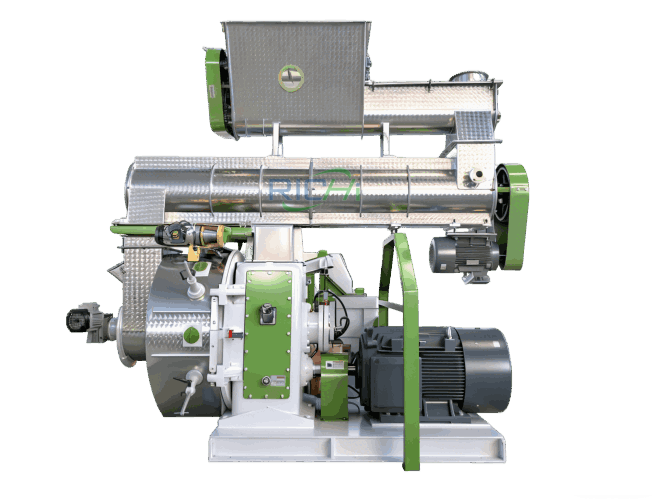
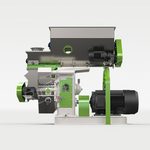
A properly selected pellet machine for chicken feed is an important part of this system. However, the pellet mill itself is only one component. The complete process must be designed around the characteristics of each formula to achieve stable production and consistent pellet quality.
This article explains how modern chicken feed pellet technology handles different formulas and what manufacturers should consider when producing multiple types of poultry feed.
Why Chicken Feed Formulas Are Different
Chicken feed formulas are developed according to the nutritional requirements of different poultry groups.
For example, young chicks require diets that support early growth and development. Broilers need feed that supports rapid weight gain and efficient feed utilization, while layers require diets that support egg production and shell quality.
Common chicken feed categories include:
- Chick starter feed
- Broiler starter feed
- Broiler grower feed
- Broiler finisher feed
- Layer feed
- Breeder feed
- Pullet feed
- Specialty poultry feed
Although these feeds may use many of the same raw materials, their proportions can be significantly different.
Typical ingredients include:
- Corn
- Wheat
- Barley
- Soybean meal
- Wheat bran
- Rice bran
- Rapeseed meal
- Sunflower meal
- Fish meal
- Vegetable oil
- Molasses
- Limestone
- Phosphate
- Salt
- Vitamins
- Minerals
- Amino acids
- Other feed additives
The physical characteristics of these ingredients also vary. Therefore, changing a formula can change the way the feed behaves during processing.
How Formula Changes Affect Pellet Production
A feed formula can affect nearly every stage of pellet production.
For example, increasing soybean meal may change the protein content and physical behavior of the mixture. Adding more bran can increase fiber levels, while increasing oil can affect pellet formation and die performance.
Important formula-related factors include:
- Protein content
- Fiber content
- Starch content
- Fat content
- Moisture
- Particle size
- Bulk density
- Ingredient hardness
- Ingredient flowability
- Thermal sensitivity
These characteristics determine how the production process should be adjusted.
A modern feed mill therefore needs more than a pellet machine. It needs an integrated processing system capable of adapting to different feed formulas.
Automatic Formula Management
One of the most effective technologies for handling different chicken feed formulas is an automated batching and control system.
Instead of manually calculating and weighing every ingredient, operators can store multiple formulas in the production control system.
For example, the system may contain separate formulas for:
- Broiler starter
- Broiler grower
- Broiler finisher
- Layer feed
- Chick starter
When the operator selects a formula, the automatic batching system can control the required quantities of major and minor ingredients.
This helps reduce errors and makes formula changes faster.
For a commercial feed factory producing several products, automatic formula management can significantly simplify production scheduling.
Accurate Batching for Different Formulas
Different formulas require different ingredient proportions.
Suppose a broiler formula contains a high proportion of corn and soybean meal, while another layer formula includes more limestone and mineral ingredients.
The batching system must accurately measure both major and minor ingredients.
Major ingredients may be handled using larger weighing bins, while micro-ingredients can require dedicated dosing systems.
Accurate batching helps ensure that the final feed corresponds to the intended nutritional formulation.
It also improves batch-to-batch consistency.
Grinding Requirements Can Change With the Formula
Grinding is another stage that must adapt to different formulas.
Different raw materials have different hardness and physical structures.
Corn, wheat, soybean meal, bran, and other ingredients may require different grinding characteristics.
Particle size influences:
- Mixing uniformity
- Pellet durability
- Conditioning
- Pellet appearance
- Feed intake
- Production efficiency
For young chicken feed, relatively fine particles may be desirable because smaller birds have smaller digestive and feeding capacities.
For other feed types, the grinding specification may be different.
A hammer mill or other grinder can be equipped with appropriate screens to achieve the required particle size.
The grinding process should therefore be selected according to the feed formula rather than using one fixed setting for every product.
Fine Grinding for Chick Feed
Chick starter feed often requires careful control of particle size.
Very young birds may have difficulty consuming large feed particles. A finer and more uniform feed structure can make the product easier to consume.
Fine grinding can also improve mixing uniformity for formulas containing small quantities of vitamins, minerals, and other additives.
However, excessive grinding can increase energy consumption and may not always provide additional benefits.
The appropriate particle size should therefore be determined according to the feed type and production objectives.
Managing High-Fiber Formulas
Some chicken feed formulas contain higher levels of wheat bran, rice bran, or other fibrous materials.
High-fiber materials can influence pellet production because they may have different compression characteristics from starch-rich grains.
Fiber-rich formulas may require adjustments to:
- Grinding
- Conditioning
- Feed rate
- Die selection
- Roller adjustment
- Cooling
The goal is to maintain stable material flow through the pellet mill while producing pellets with sufficient durability.
A properly configured pellet machine for chicken feed should be selected according to the actual formula and expected production capacity rather than simply choosing equipment based on nominal output.
Managing High-Starch Formulas
Starch-rich ingredients such as corn and wheat can behave differently during conditioning and pelletizing.
When exposed to sufficient heat and moisture, starch can gelatinize to some degree, helping improve the binding characteristics of the feed.
This is one reason steam conditioning is important in modern pellet production.
The conditioning process should provide appropriate:
- Temperature
- Moisture
- Steam distribution
- Residence time
The exact conditions depend on the formula and equipment configuration.
Managing High-Protein Formulas
Protein-rich ingredients such as soybean meal are widely used in poultry feed.
A high-protein formula may have different physical properties from a grain-dominated formula.
The feed manufacturer needs to consider the complete formula rather than focusing on individual ingredients.
For example, a formula containing high levels of soybean meal and relatively low levels of starch may require different conditioning and pelletizing settings from a high-corn formula.
This is where process flexibility becomes important.
The Role of Conditioning in Different Formulas
Conditioning is one of the most important stages for adapting the pellet production process to different formulas.
During conditioning, steam is introduced into the feed mixture.
The process can:
- Increase temperature
- Increase moisture
- Improve material plasticity
- Improve starch gelatinization
- Improve pellet binding
- Reduce friction during pelletizing
Different formulas respond differently to conditioning.
A formula with high starch content may behave differently from one containing more fiber or protein.
Therefore, steam addition and conditioning time may need to be adjusted when changing formulas.
Controlling Moisture Before Pelletizing
Moisture is another important factor.
If the feed mixture is too dry, pellet formation may become more difficult and energy consumption may increase.
If excessive moisture is introduced, the material may become too soft or create downstream drying and cooling challenges.
An automated conditioning system can help regulate moisture addition more consistently.
Temperature and moisture sensors can also provide useful information for operators.
This allows the production line to respond more effectively to formula changes.
Choosing the Right Pellet Die
Pellet die selection is important when producing different chicken feed formulas.
Die hole diameter determines the basic pellet diameter.
Common poultry feed pellet sizes vary according to the age and type of chicken.
For example:
- Chick feed may require smaller pellets
- Broiler feed may use medium-sized pellets
- Layer feed may use different pellet specifications
- Breeder feed may have its own requirements
The die’s compression ratio also influences pellet formation.
A formula containing different levels of fiber, starch, protein, and fat may respond differently to compression.
Therefore, die selection should consider both the desired pellet size and the physical characteristics of the feed formula.
Adjusting Roller and Feed Rate
The rollers inside the pellet mill work together with the die to compress the conditioned feed.
Roller adjustment can influence:
- Pellet formation
- Material throughput
- Die wear
- Energy consumption
- Pellet durability
Feed rate is equally important.
If the feed rate is too high, the pellet mill may become overloaded.
If it is too low, production capacity may not be fully utilized.
Variable-frequency feeding systems can provide more precise control.
This is particularly useful when switching between formulas with different processing characteristics.
How a Pellet Machine Handles Formula Changes
A modern pellet machine for chicken feed should be capable of processing different formulas within its designed operating range.
However, formula flexibility does not mean every formula can be processed using exactly the same settings.
When changing from one product to another, operators may need to adjust:
- Feed rate
- Steam addition
- Conditioning time
- Die specification
- Roller gap
- Liquid addition
- Pellet size
- Cooling conditions
These adjustments help maintain stable operation.
In an automated plant, many of these parameters can be linked to the selected production formula.
Managing High-Fat Formulas
Fat is an important energy source in poultry diets, but excessive fat can influence pellet production.
Higher fat levels may reduce friction inside the die and affect pellet formation.
If the formula contains additional oil, the feed manufacturer may need to optimize where and how the oil is added.
Oil may be introduced during mixing or applied after pelletizing through a coating system, depending on the formula and production process.
Post-pellet liquid coating can be useful when manufacturers want to increase energy density without excessively affecting pellet formation.
Managing Molasses and Other Sticky Ingredients
Some formulas contain molasses or other sticky liquid ingredients.
These materials can affect material flow and pelletizing behavior.
If liquid addition is not controlled properly, the feed may become difficult to handle.
Automated pumps and flow meters can help control the amount of liquid added.
The mixing system should also provide sufficient distribution to avoid localized concentrations.
Automatic Mixing Is Essential for Formula Consistency
After batching, ingredients must be thoroughly mixed.
A high-quality mixer should produce a uniform mixture within the required mixing time.
This is particularly important for formulas containing small quantities of additives.
Poor mixing can result in nutrient distribution problems even if the initial batching process is accurate.
Automation can control:
- Ingredient sequence
- Mixing time
- Liquid addition
- Mixer discharge
- Batch identification
This creates greater consistency when producing multiple formulas.
Handling Different Pellet Sizes
Chicken feed manufacturers may need to produce different pellet sizes on the same production line.
For example, a factory may produce smaller pellets for young broilers and larger pellets for older birds.
The pellet mill can accommodate different die specifications.
Changing the die allows manufacturers to produce different pellet diameters.
The downstream cooling and screening systems should also be designed to handle the required product size.
If crumbled feed is required, a crumbler can be installed after cooling.
Crumbling for Young Chickens
Young chickens may consume crumbles rather than whole pellets.
The process typically follows:
Pelletizing → Cooling → Crumbling → Screening
The crumbler breaks the pellets into smaller particles.
The screening system then separates particles according to the desired size range.
This provides manufacturers with another way to adapt the same basic production process to different poultry growth stages.
(Learn more: https://richipelletizer.com/poultry-feed-crumble-machine/)
Cooling Requirements Can Change
Different feed formulas can have different pellet characteristics after leaving the pellet mill.
Cooling must remove sufficient heat and moisture before the product enters storage or packaging.
The cooling process can be adjusted according to:
- Pellet temperature
- Moisture
- Pellet size
- Production rate
- Formula characteristics
An automated cooler can regulate material discharge and airflow to maintain more stable conditions.
Screening Helps Maintain Product Uniformity
Screening is important after cooling.
It removes fines and separates particles that do not meet the required size specification.
For commercial chicken feed production, consistent pellet size can improve product appearance and handling.
Fines can often be returned to the pelletizing process.
Automated conveying and screening systems make this recycling process easier to manage.
Automation Makes Formula Switching Easier
A modern feed factory may need to change formulas several times a day.
Without automation, frequent formula changes can increase the risk of errors.
With an automated control system, operators can select the next formula and allow the system to manage batching and production parameters.
The production sequence may be:
Select Formula → Automatic Batching → Grinding → Mixing → Conditioning → Pelletizing → Cooling → Screening → Packaging
This reduces the amount of manual adjustment required.
Cleaning Between Different Formulas
Formula changes also require attention to cross-contamination.
When switching between different products, residual material can remain in:
- Bins
- Mixers
- Conveyors
- Pellet mills
- Coolers
- Screens
The production process should therefore include appropriate cleaning and sequencing procedures.
For example, the factory may arrange formulas in a logical production sequence to reduce the number of major cleanouts required.
This is particularly important when manufacturing specialty feeds.
One Production Line Can Handle Multiple Feed Products
A properly designed production line can often manufacture several types of chicken feed.
For example, the same system may produce:
- Chick starter
- Broiler starter
- Broiler grower
- Broiler finisher
- Layer feed
The production line may use the same major machines while changing formulas, die specifications, and operating parameters.
This improves equipment utilization and gives feed manufacturers greater production flexibility.
How to Design a Flexible Chicken Feed Pellet Line
When designing a line for multiple formulas, manufacturers should consider the following factors.
1. Formula Range
Identify all current and future feed formulas.
2. Production Capacity
Determine the required output for each product.
3. Raw Materials
Analyze ingredient hardness, fiber content, moisture, fat, and flowability.
4. Pellet Size
Determine the required pellet diameter and whether crumbles are needed.
5. Conditioning
Select suitable conditioning equipment according to the formula range.
6. Pellet Mill
Choose a pellet mill with sufficient capacity and appropriate die options.
7. Cooling and Screening
Make sure downstream equipment can handle the highest expected production rate.
8. Automation
Determine which processes should be automatically controlled.
9. Formula Management
Include a control system capable of storing and managing multiple recipes.
10. Future Expansion
Leave sufficient flexibility for additional products and higher production capacity.
Why Complete Process Design Matters
The pellet mill cannot compensate for problems elsewhere in the production process.
If raw materials are poorly ground, mixing is inconsistent, steam conditioning is unstable, or cooling is insufficient, pellet quality may still be poor even when the pellet machine itself is operating correctly.
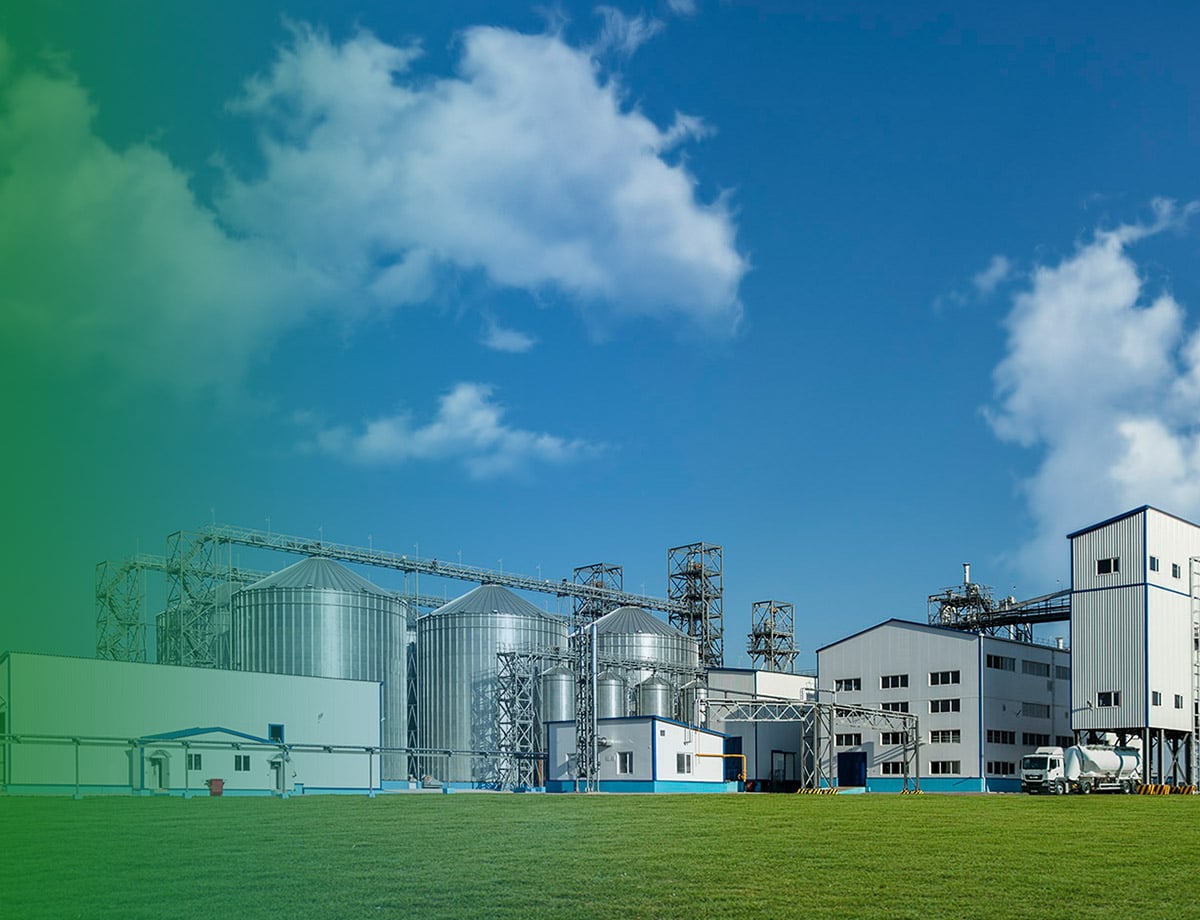
This is why modern chicken feed production should be considered as a complete process rather than a single-machine operation.
A complete system should coordinate:
Raw Materials → Grinding → Batching → Mixing → Conditioning → Pelletizing → Cooling → Screening → Packaging
Each stage affects the next.
(useful site:RICHI PELLETIZER)
Final Thoughts
Different chicken feed formulas require different processing strategies. Variations in starch, protein, fiber, fat, moisture, and ingredient characteristics can influence grinding, mixing, conditioning, pelletizing, cooling, and screening.
Modern chicken feed pellet technology addresses these differences through accurate batching, automatic formula management, adjustable conditioning, flexible pellet mill operation, controlled feeding, and automated downstream processing.
A properly selected pellet machine for chicken feed is a central part of this process, but its performance depends on how well the entire production line is designed around the feed formula.
For feed manufacturers producing multiple poultry products, the goal is not simply to find a machine that can make pellets. The goal is to build a flexible production system that can process different formulas efficiently while maintaining stable pellet quality.
With the right combination of raw material preparation, formula control, conditioning, pelletizing, cooling, screening, automation, and quality management, one chicken feed production line can efficiently support a wide range of poultry feed products and adapt to changing market and production requirements.