

Agricultural residues are often treated as a seasonal disposal problem. After corn, rice, wheat, and other crops are harvested, large quantities of stalks and straw remain in fields or around farms. Some are reused as animal bedding or returned to the soil, while others are burned, piled up, or left unused. As energy costs rise and industries search for more renewable fuel sources, these residues are gaining attention as practical raw materials for densified biomass fuel.
The transformation from loose plant material into compact pellets can change the economics of residue handling. Pellets require less storage space, are easier to transport, and provide a more uniform fuel form than loose straw or stalks. For farmers, biomass processors, and small energy businesses, the real opportunity lies not simply in owning a pellet machine, but in building a processing strategy around raw material availability, moisture, logistics, and the intended end product.
Why Crop Residues Deserve a Second Look
Corn stalks and other agricultural fibers have several qualities that make them suitable for pellet production. They are widely available in agricultural regions, renewable on an annual basis, and generally much less expensive than purpose-grown energy crops.
The challenge is that loose residues are difficult to handle efficiently. A truck can transport a large quantity of compact material, but much of the volume of loose stalks is actually air. Storage becomes expensive because large barns, covered yards, or open storage areas may be required.
Pelletization changes this equation.
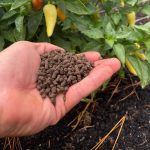
When fibrous materials are prepared correctly and compressed under pressure, their bulk density increases significantly. The resulting pellets are easier to move through conveyors, store in bags or bulk silos, and feed into combustion systems. The same concept applies to many agricultural by-products, including rice straw, wheat straw, corn residues, and sugar-processing fibers.
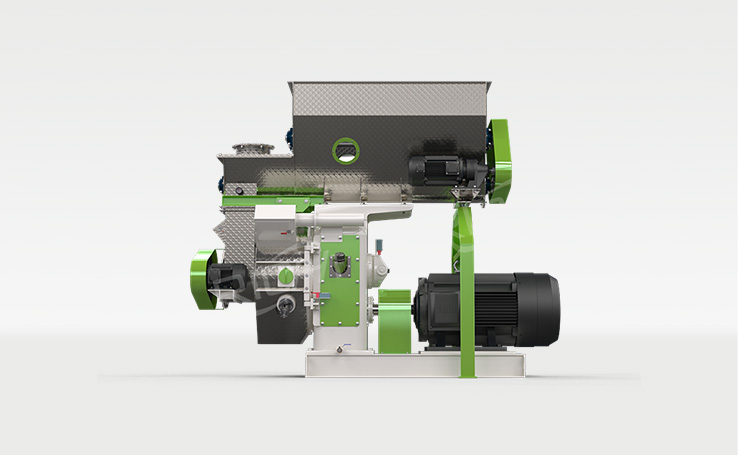
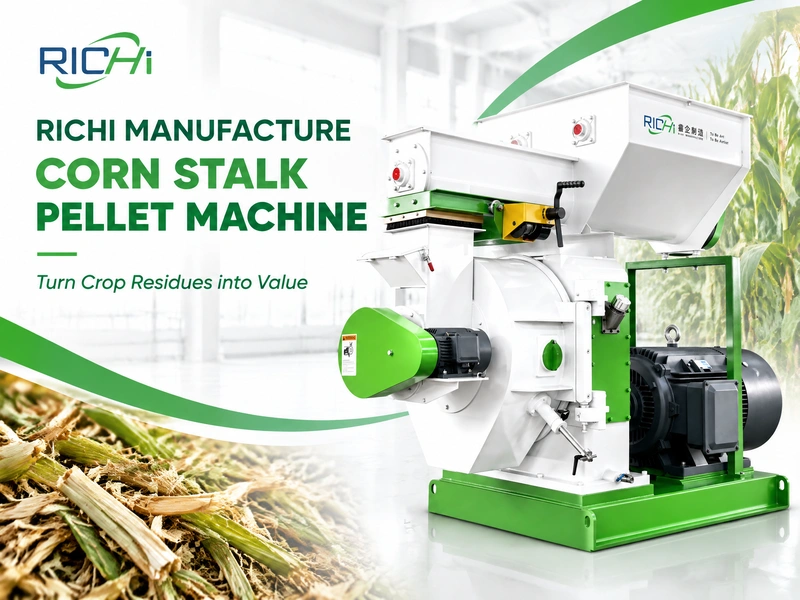
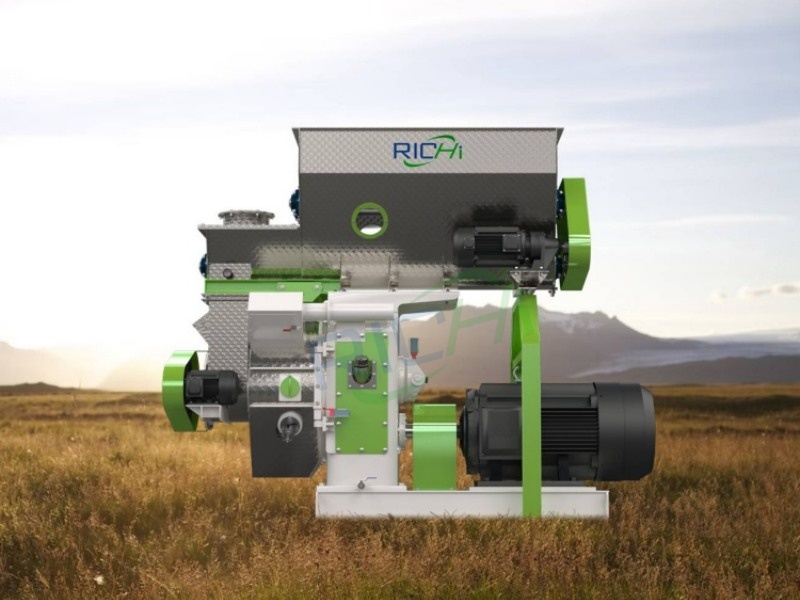
This is where a properly selected corn stalk pellet machine becomes part of a larger material-utilization strategy rather than simply another piece of farm equipment.
From Harvest Waste to Processable Material
A successful pellet operation starts long before the pressing stage.
Freshly collected stalks normally contain excessive moisture and have an irregular structure. Long fibers can wrap around equipment, while oversized pieces can create unstable feeding conditions. Before compression, the raw material generally needs to pass through several preparation stages.
1. Collection and storage
The first consideration is how the material will be collected.
Baled residues are convenient for centralized storage, while chopped or loose material can be transported more quickly from nearby fields. Storage should protect the biomass from prolonged rain exposure. Wet material may begin to deteriorate, develop mold, or require additional drying energy later.
2. Size reduction
A crusher or hammer mill is usually required to make the material more uniform. The objective is not simply to make the particles smaller. It is to produce a structure that can be fed smoothly and compressed consistently.
Different residues behave differently. Corn stalks tend to have long fibrous sections, rice straw may be lighter and more difficult to feed, and wheat straw can have a different fiber balance depending on harvest conditions.
3. Moisture adjustment
Moisture is one of the most important variables in biomass pellet production.
Material that is too dry may not bind efficiently during compression. Material that is too wet can produce soft pellets, unstable production, higher energy consumption, or difficulties in cooling and storage.
Rather than applying one fixed moisture target to every project, operators should evaluate the actual raw material, particle structure, equipment design, and desired pellet quality.
Why Capacity Should Be Based on Supply
A common mistake is to choose production capacity before calculating raw material availability.
Imagine a farm or biomass collection center that has a large seasonal amount of rice straw available. A high-capacity system may appear attractive because it can process more material per hour. However, if the operation cannot collect enough material consistently throughout the year, the equipment may spend too much time underutilized.
Conversely, a smaller agricultural enterprise may have enough nearby residues to justify a continuous commercial operation. In such a situation, capacity becomes a business decision rather than simply a technical specification.
A project involving 3-4 T/H rice straw pellet machine for sale should therefore be evaluated through more than its hourly output. Buyers should consider annual material supply, collection radius, working hours, storage capacity, electricity availability, labor, and pellet demand.
Agricultural Residues Are Not All the Same
One of the most interesting aspects of biomass pellet production is that different residues require different approaches.
Corn stalks usually contain long fibers and can require effective size reduction before pelletizing. Rice straw tends to be relatively light and may present feeding challenges. Wheat straw can have excellent availability in grain-producing regions, but its characteristics vary with harvest conditions and storage.
Sugarcane residues are also valuable. Bagasse, for example, already comes from a processing environment where the material is collected centrally, which can simplify logistics compared with field-collected straw.
The lesson is simple: there is no universal biomass recipe.
A machine that performs well with sawdust may not automatically be optimized for agricultural residues. The fiber length, ash content, moisture, density, and natural binding characteristics all influence the processing approach.
What Makes a Biomass Pellet Business Viable?
A pellet business becomes more attractive when the raw material and the market are both favorable.
Raw material cost
The lower the delivered cost of the residue, the greater the opportunity for value creation. However, “free” biomass is rarely truly free. Collection, baling, loading, transportation, storage, and preprocessing all create costs.
Transportation distance
Low-density straw can become expensive to transport over long distances. This is why many successful biomass projects are located relatively close to farms, collection centers, or agro-processing facilities.
Final pellet market
Some pellets are sold as industrial fuel. Others may be used by heating systems, agricultural facilities, or local industrial boilers. Pellet specifications depend on the combustion system and customer requirements.
Storage requirements
Finished pellets are denser than loose biomass, but they still require protection from moisture. A good storage design is an important part of plant planning.
Building a Flexible Processing System
A well-designed biomass project should not depend on a single raw material unless supply conditions are extremely stable.
For example, a plant may primarily process corn residues after harvest while using wheat or rice straw during another season. This flexibility can improve equipment utilization.
However, using several materials requires proper testing. Different residues can require adjustments in crushing, drying, feeding, and pelletizing parameters. A professional system should be planned around the actual combination of raw materials rather than simply assuming that every biomass type behaves identically.
This is one reason operators often evaluate complete processing solutions rather than buying individual machines without considering the whole workflow. Richi Pellet Mill is one example of a supplier name that may appear during equipment research, but buyers should always compare machine configuration, capacity, technical support, spare parts, and raw-material adaptability rather than making decisions based on brand recognition alone.
The Role of Pellet Quality
High production volume does not automatically mean a successful pellet business.
Pellets need to remain reasonably durable during handling and transportation. Excessive fines can create problems in storage, bagging, conveying, and combustion systems. Pellet size should also be matched to the intended application.
In some markets, smaller pellets are preferred for easier automatic feeding. In other applications, larger diameter products may be acceptable.
The best specification is ultimately determined by the customer’s fuel system, handling equipment, and market standards.
Making Better Use of Seasonal Agriculture
One of the strongest arguments for agricultural residue pelletization is the ability to convert a seasonal material into a storable energy product.
Harvest occurs within a limited period, but energy consumption continues throughout the year. Pelletization creates a buffer between those two cycles.
Instead of dealing with loose residue immediately after harvest, operators can collect, process, store, and gradually sell the compact fuel product. This can help reduce the pressure caused by seasonal oversupply.
(Related Post: https://biomasspelletizer.com/wheat-straw-pellet-machine/ )
A practical project may therefore consist of three interconnected stages:
Harvest management → biomass preparation → pellet production
The pellet press is important, but the economics depend on the complete chain.
What Buyers Should Evaluate Before Investing
Before purchasing equipment, several questions deserve detailed attention:
- How much biomass is actually available each year?
- How much of it can be collected economically?
- What is the average moisture range?
- What particle size will be required?
- Will one raw material be processed or several?
- How many operating hours are planned each day?
- Where will the finished pellets be sold?
- What pellet diameter does the customer require?
- Is drying necessary?
- What storage capacity is available?
These questions are more useful than choosing equipment solely from a catalog capacity number.
The Bigger Opportunity
Agricultural residue pellet production represents a broader shift in how farms and processing industries think about waste.
Instead of viewing stalks and straw as leftovers, businesses can evaluate them as secondary resources. The value may come from replacing purchased fuel, reducing disposal costs, creating a new revenue stream, or supplying nearby industries with renewable solid fuel.
The strongest projects usually combine local raw material availability with realistic market demand. They also treat preprocessing, storage, quality control, and maintenance as essential parts of the operation.
For readers researching additional technical specifications, material preparation methods, and equipment configurations, you can from this source explore more practical information before planning a residue-based pellet project.
Ultimately, the goal is not simply to compress agricultural waste. It is to create a dependable product from a material that would otherwise have limited economic value. With careful planning, crop residues can move from the edge of the farm to a useful position in the renewable energy supply chain.