

One Factory, Several Cat Litter Products?
The cat litter market is no longer limited to one type of product.
Consumers can find wood-based litter, tofu litter, bentonite litter, paper litter and various hybrid products. Each category has different physical characteristics and processing requirements.
For manufacturers, this creates an important question:
Should a factory be designed for one product or several?
The answer depends on the company’s business strategy, raw-material supply and expected sales volume.
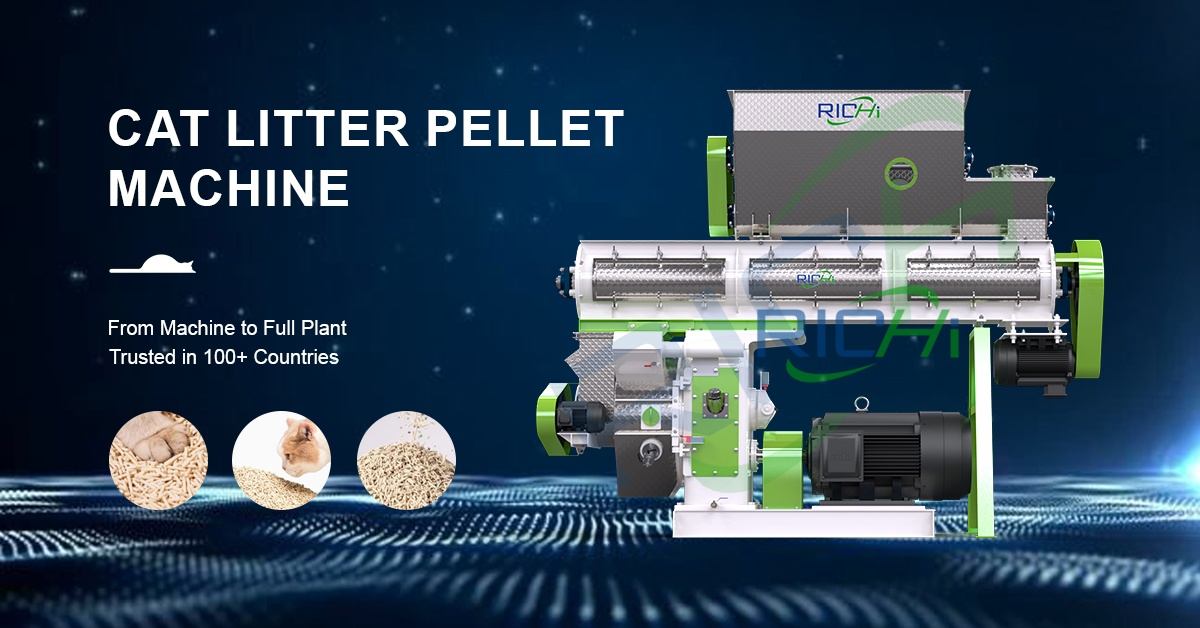
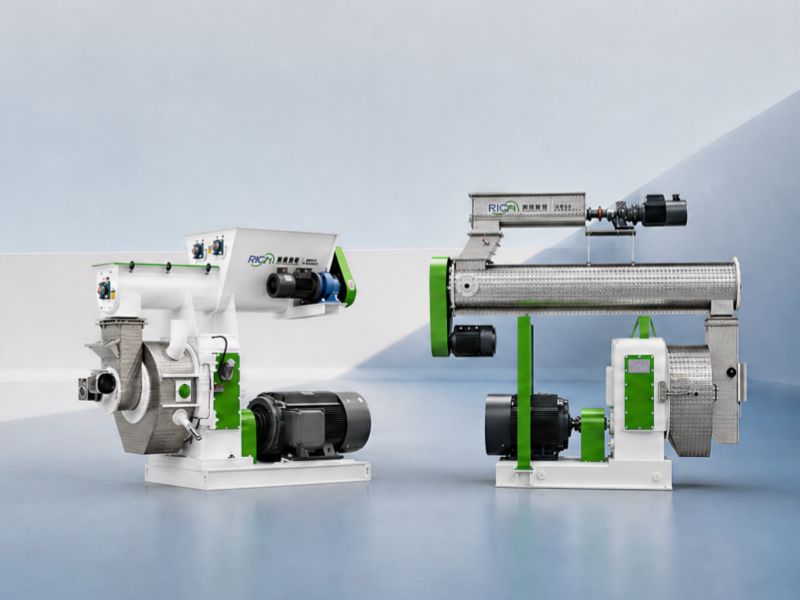
A flexible cat litter pellet machine can become valuable when a manufacturer wants to process different formulations, but machine flexibility alone is not enough. The surrounding production system must also be adaptable.
Why Raw Materials Create Different Challenges
Wood and mineral materials behave differently.
Sawdust is fibrous and relatively lightweight. Bentonite is mineral-based and has different density and moisture characteristics. Plant fibers may require additives or additional mixing.
Paper-based materials can also require different preparation steps.
Therefore, a flexible production line needs to accommodate differences in:
- Particle size
- Moisture
- Bulk density
- Formula
- Additives
- Pellet dimensions
A factory that ignores these differences may find that changing products requires extensive manual adjustment.
The Value of Modular Production
A modular production system divides the factory into functional sections.
For example:
Raw-material preparation
↓
Mixing and formulation
↓
Pelletizing
↓
Drying
↓
Cooling
↓
Screening
↓
Packaging
Each section can be configured according to the material.
This makes it easier to modify one stage without redesigning the entire factory.
For example, a manufacturer may keep the same packaging system while adding a new raw-material preparation line.
Another business may use one pelletizing section for multiple products while changing dies or formulations.
Flexible Does Not Mean Unlimited
There is a common misunderstanding that one pellet machine can automatically process every type of cat litter.
In reality, flexibility has technical limits.
A machine designed for one material does not necessarily deliver the same performance with another material.
The correct approach is to identify the product range first.
For example:
Product A: wood-based pellets
Product B: plant-fiber pellets
Product C: mineral-based pellets
Then determine which equipment can realistically be shared.
This prevents the factory from being designed around unrealistic assumptions.
(Related Post:https://www.richipelletmill.com/cat-litter-pellet-machine/)
Where Does Mixing Become Important?
Mixing becomes particularly important when a formula contains several ingredients.
A manufacturer may combine a main raw material with:
- Binders
- Absorbent materials
- Odor-control ingredients
- Colorants
- Other functional additives
Uniform distribution is important because uneven mixing can result in inconsistent finished products.
The mixer should therefore be selected according to:
- Formula
- Material density
- Batch size
- Required mixing time
- Moisture
- Production capacity
The mixer is not simply a supporting machine. It can influence the consistency of the pelletizing feed.
Why Changeover Time Matters
A factory producing multiple products needs to consider product changeover.
Suppose a manufacturer produces wood-based cat litter in the morning and a different formula in the afternoon.
If changing products requires several hours of cleaning and adjustment, the factory loses productive time.
A flexible plant should therefore consider:
- Material storage
- Separate feeding lines
- Easy-clean equipment
- Accessible conveyors
- Recipe management
- Packaging changeover
The exact solution depends on the number of products.
Can Existing Biomass Equipment Be Used?
Some businesses enter cat litter production from the biomass industry.
They may already own equipment such as:
- Wood chippers
- Hammer mills
- Dryers
- Conveyors
- Storage bins
This can create a foundation for a wood-based cat litter project.
For example, a wood pellet factory may already have the equipment required to prepare sawdust. Additional cat litter-specific stages can then be added.
However, product quality requirements should be evaluated carefully.
Fuel pellets and cat litter pellets are different commercial products. The same raw material may be used, but the desired final characteristics are not necessarily identical.
Capacity Flexibility Is Also Important
A production line can be flexible in another way: capacity.
A company may initially require only a few tons per hour but expect demand to increase.
Instead of purchasing the largest possible system, the factory can consider whether future expansion can be achieved through:
- Additional pellet mills
- Parallel drying capacity
- Larger storage
- Additional packaging lines
- Expanded raw-material handling
This approach can make investment planning more manageable.
Why Packaging Should Be Designed Early
Different cat litter products may require different packaging.
A premium retail product may use small bags.
A wholesale product may use larger bags.
Private-label customers may require specific packaging formats.
Therefore, a flexible factory should consider packaging requirements during the initial design stage.
Packaging flexibility may include:
- Adjustable filling weights
- Different bag sizes
- Automatic weighing
- Automatic sealing
- Labeling
- Date coding
A highly productive pelletizing section is not useful if the packaging system cannot handle the output.
Digital Control and Recipe Management
As the number of products increases, manual production records can become difficult to manage.
Modern control systems can help operators monitor:
- Feeding
- Mixing
- Pelletizing
- Temperature
- Dryer operation
- Production output
Recipe management can also help standardize repeated formulations.
The purpose is not to automate everything.
The purpose is to reduce unnecessary variation and make production easier to repeat.
How Can a Manufacturer Decide Whether Flexibility Is Worth Paying For?
Flexibility has a cost.
Additional conveyors, storage bins, mixers, control systems and changeover features can increase investment.
Therefore, manufacturers should estimate the actual business value.
Ask:
- How many products will be produced?
- How frequently will products change?
- Are raw materials shared?
- Are different products sold to the same customers?
- Will production volume justify automation?
- Is expansion expected?
If a factory will produce one product for several years, an extremely flexible system may not be necessary.
If the business expects several formulas and frequent product changes, flexibility may be more valuable.
Working With an Equipment Manufacturer
A supplier should be able to translate product requirements into equipment configuration.
This may involve selecting different:
- Pellet mill models
- Dies
- Mixers
- Dryers
- Screens
- Conveyors
- Packaging systems
For example, pellet mill for sale searches can provide a starting point for understanding available equipment, but the final selection should be based on actual raw materials and product specifications.
The most useful equipment proposal is therefore not necessarily the one containing the most machines.
It is the one that explains why each machine is included.
A Flexible Plant Is Really a Flexible Business System
The concept of flexibility goes beyond machinery.
A flexible cat litter manufacturer can adjust:
Raw material → formula → production capacity → pellet specification → packaging → market
This can make it easier to respond to changing customer requirements.
However, flexibility should be engineered rather than assumed.
The best approach is to identify realistic future products and then design the necessary shared equipment around them.
Manufacturers researching different production configurations can about this find useful background information before discussing a customized plant.
The final goal is not to build a complicated factory.
It is to build a factory that can change when the business needs to change.