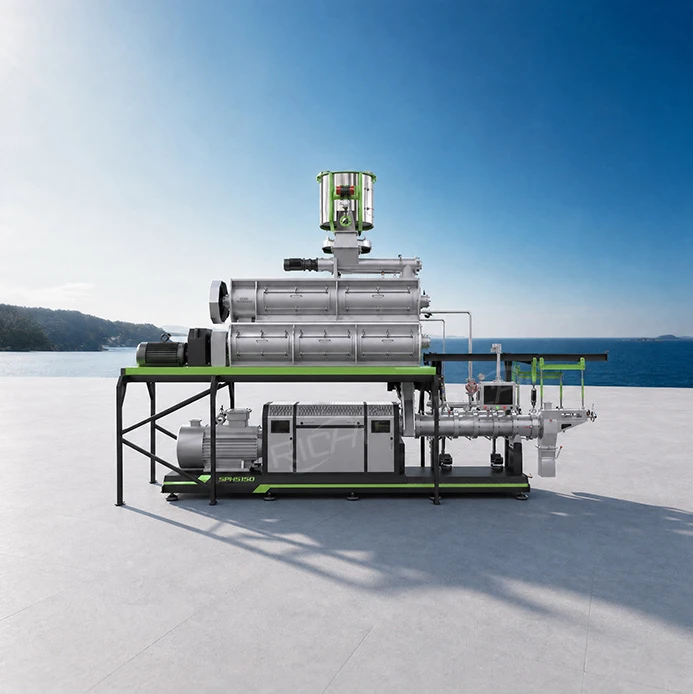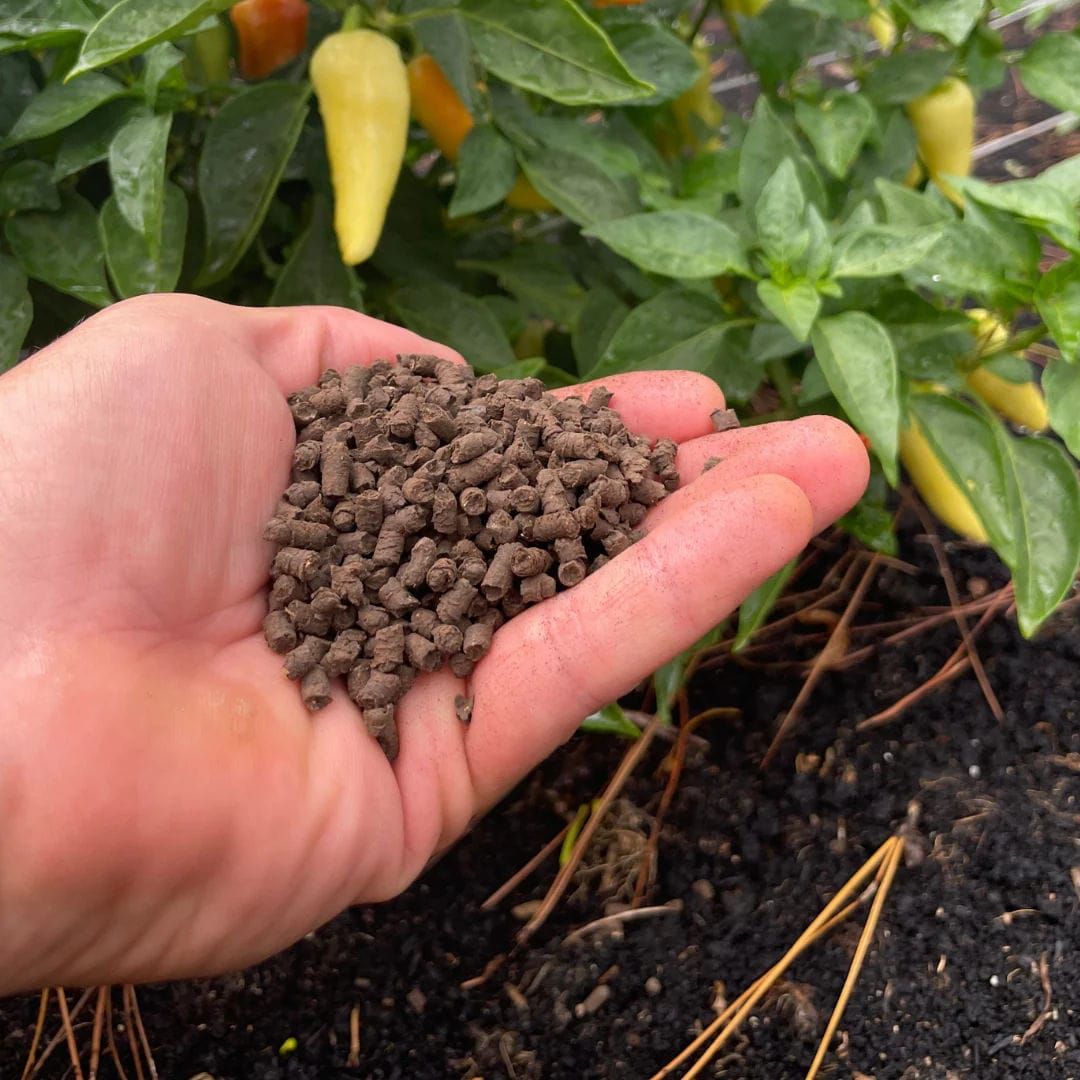


Cat litter manufacturing may appear simple from the outside, but producing consistent, low-dust, absorbent, and easy-to-use cat litter on a commercial scale requires a carefully designed processing system. Different types of cat litter—including bentonite, tofu, wood, corn, cassava, and other plant-based products—require different raw materials and production technologies.
A complete production system may involve raw material receiving, cleaning, crushing, grinding, drying, batching, mixing, pelletizing or granulation, cooling, screening, coating, dust collection, and packaging. Therefore, choosing the right cat litter manufacturing equipment is one of the most important decisions when establishing a cat litter production business.
This article introduces the main equipment used in cat litter production, explains what each machine does, and shows how these machines can be integrated into a complete production line.
1. What Determines the Equipment Needed for Cat Litter Production?
There is no single equipment configuration suitable for every cat litter product.
The required machinery depends mainly on:
- Type of cat litter
- Raw material
- Raw material moisture
- Raw material particle size
- Production capacity
- Target pellet size
- Product density
- Clumping requirements
- Odor-control requirements
- Packaging specifications
- Automation level
For example, a tofu cat litter production line based on soybean residue may require drying, grinding, mixing, pelletizing, cooling, and screening.
A wood cat litter line based on dry sawdust may require less crushing.
Bentonite cat litter follows a different mineral-processing and granulation process.
Therefore, the first step is always to determine the product and raw material before selecting machinery.
2. Raw Material Receiving Equipment
The production process starts with receiving raw materials.
Depending on the raw material, a factory may use:
- Receiving hopper
- Dumping station
- Belt conveyor
- Screw conveyor
- Bucket elevator
- Storage bin
- Automatic feeder
The receiving system transfers raw materials into storage or directly into the preprocessing section.
A properly designed receiving system can reduce manual handling and improve material flow.
For large factories, automatic conveying systems are especially useful because they connect different processing machines into a continuous production line.
3. Raw Material Storage Equipment
Storage equipment protects raw materials from contamination and environmental conditions.
Common equipment includes:
- Silos
- Storage bins
- Hoppers
- Warehouse storage systems
For plant-based cat litter, moisture control is particularly important.
Sawdust, soybean residue, corn fiber, and other biomass materials can absorb moisture during storage.
Excessive moisture can affect:
- Grinding
- Mixing
- Pelletizing
- Drying
- Storage stability
Therefore, storage facilities should be designed according to the characteristics of the raw material.
4. Cleaning Equipment
Raw materials may contain unwanted materials.
A cleaning system can remove:
- Stones
- Metal
- Plastic
- Soil
- Oversized particles
- Other contaminants
Typical cleaning equipment includes:
Vibrating Screen
Used to separate materials according to particle size.
Magnetic Separator
Used to remove ferrous metal particles.
Rotary Screen
Can be used for continuous screening and material separation.
Cleaning protects downstream equipment and helps improve finished-product quality.
5. Crushing Equipment
Large raw materials need to be reduced before further processing.
Crushing equipment may be required for:
- Wood chips
- Bamboo
- Agricultural residues
- Large plant fibers
- Mineral lumps
A crusher reduces the material into smaller pieces that are easier to grind or granulate.
For example, wood chips can be processed into smaller particles before entering a hammer mill.
If the raw material is already in the form of fine sawdust, a separate crusher may not be necessary.
6. Hammer Mill or Grinding Equipment
A hammer mill is commonly used to reduce raw materials to a suitable particle size.
The grinding process is important because particle size affects:
- Pellet formation
- Pellet durability
- Density
- Absorption
- Surface quality
- Dust generation
For plant-based cat litter, grinding can produce a more uniform material before mixing and pelletizing.
However, excessive grinding should be avoided because it increases electricity consumption and may produce excessive dust.
The ideal grinding size depends on the material and the final product.
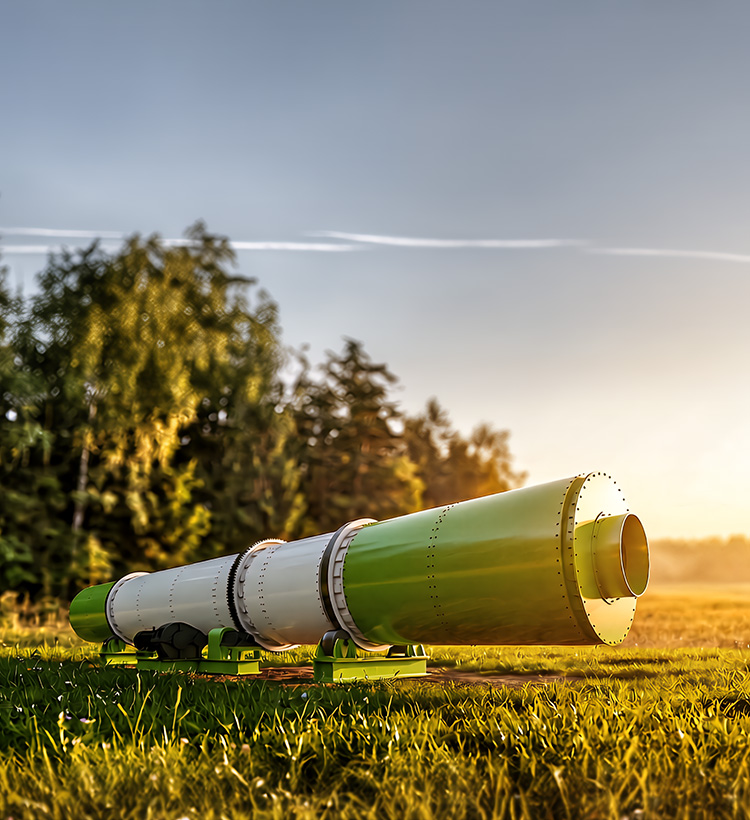
7. Drying Equipment
Drying is one of the most important processes in many cat litter production lines.
Plant-based materials can contain significant moisture.
A commercial dryer may be used to reduce moisture before or after pelletizing.
Common drying equipment includes:
- Rotary drum dryer
- Continuous dryer
- Hot-air drying system
A rotary dryer is commonly used for continuous industrial production.
The drying system should be selected according to:
- Initial moisture
- Target moisture
- Production capacity
- Raw material characteristics
- Available heat source
Efficient drying can significantly reduce production costs.
8. Batching Equipment
Some cat litter products contain several ingredients.
For example, a tofu cat litter formula may contain:
- Soybean residue
- Starch
- Plant fiber
- Odor-control additives
- Other functional ingredients
A batching system accurately measures each ingredient according to the formula.
Automatic batching can improve:
- Formula accuracy
- Production consistency
- Labor efficiency
- Process control
For large commercial factories, computerized batching systems can be connected to the central production-control system.
9. Mixing Equipment
After batching, the ingredients need to be thoroughly mixed.
A horizontal mixer is commonly used for this purpose.
The mixer distributes:
- Main raw materials
- Binders
- Starch
- Odor-control additives
- Other functional materials
Uniform mixing is important because every portion of the material should have a similar composition.
Poor mixing can cause inconsistent:
- Absorption
- Pellet strength
- Density
- Odor control
- Clumping performance
10. Moisture Addition Equipment
Before pelletizing, the material may require moisture adjustment.
A water spraying system can add controlled amounts of moisture.
The system may include:
- Water tank
- Pump
- Spray nozzles
- Flow-control system
Moisture should be distributed evenly throughout the material.
Too much moisture may result in:
- Weak pellets
- Difficult drying
- Higher energy consumption
- Material sticking
Too little moisture can make pellet formation difficult.
Therefore, moisture adjustment should be carefully controlled.
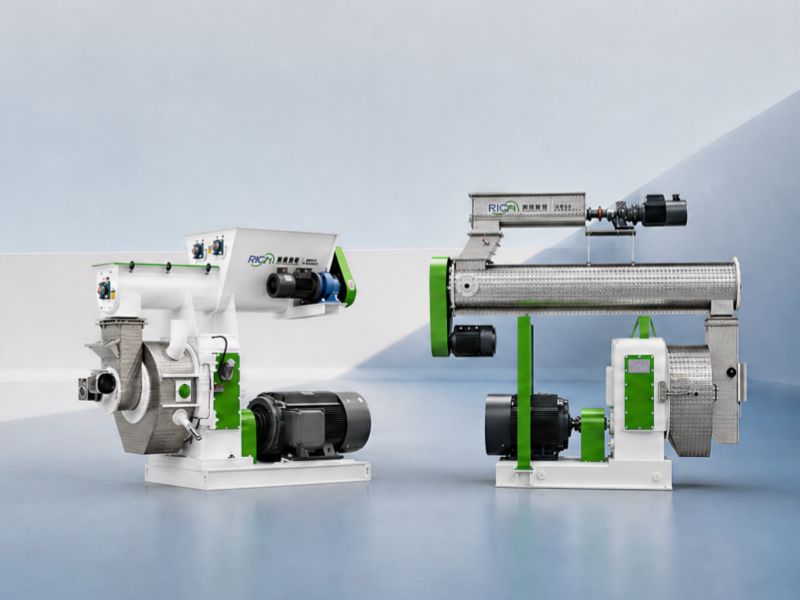
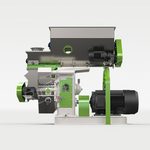
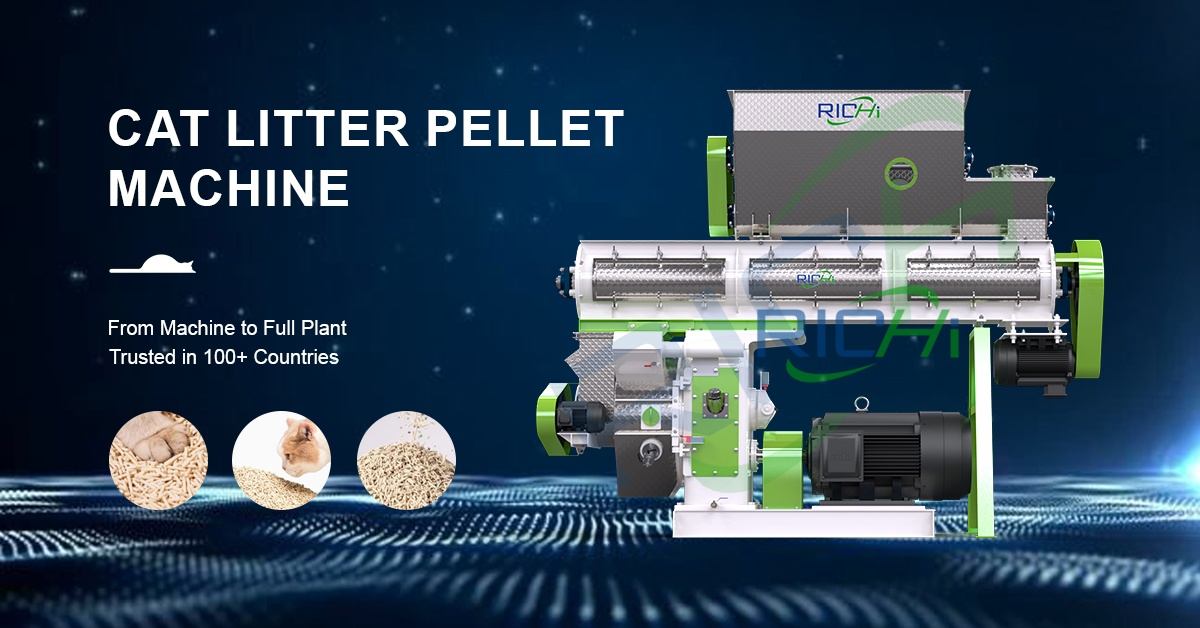
11. Cat Litter Pellet Mill
For many plant-based cat litter products, the pellet mill is one of the core machines.
A pellet mill compresses prepared material through holes in a die to produce pellets.
The main components include:
- Die
- Pressure rollers
- Feeder
- Main drive system
- Cutting system
The pellet mill influences:
- Pellet diameter
- Density
- Strength
- Production capacity
- Surface appearance
Different die specifications can be used to produce different pellet sizes.
https://pelletisingmachine.com/cat-litter-pellet-machine
12. How the Pellet Mill Works
The basic working principle is straightforward.
First, prepared material enters the pellet mill through the feeder.
The material is distributed into the compression chamber.
Rotating rollers press the material against the die.
Pressure forces the material through the die holes.
Continuous extrusion produces cylindrical pellets.
A cutter then controls pellet length.
After pelletizing, the fresh pellets proceed to drying or cooling depending on their moisture content.
13. Granulation Equipment
Not all cat litter products are manufactured with a conventional pellet mill.
Some products use granulation equipment to create particles with specific shapes and sizes.
A granulator can be selected according to:
- Raw material
- Product shape
- Particle size
- Density
- Production capacity
This is particularly relevant for certain mineral-based cat litter products.
Therefore, the forming machine should be selected according to the intended product rather than simply choosing a standard pellet mill.
14. Cooling Equipment
Fresh pellets may have elevated temperatures after drying or pelletizing.
A cooler helps reduce the product temperature before screening and packaging.
Cooling equipment can:
- Reduce pellet temperature
- Improve storage stability
- Reduce condensation
- Protect packaging
- Improve handling
For continuous production, the cooler should be matched to the output of the upstream equipment.
An undersized cooler can become a bottleneck.
15. Screening Equipment
Screening equipment separates finished cat litter from unwanted particles.
A screening machine can remove:
- Fine powder
- Broken pellets
- Oversized particles
- Irregular granules
Common options include:
- Vibrating screen
- Rotary screen
- Multi-layer screening machine
Screening improves particle-size consistency and reduces excessive fines.
Suitable fines may be recycled into the production process, depending on the formula.
16. Coating and Spraying Equipment
Some cat litter products require post-processing treatment.
A coating or spraying machine can apply:
- Fragrance
- Odor-control ingredients
- Functional additives
- Other surface treatments
For example, an odor-control additive can be applied after pelletizing.
A controlled spraying system helps achieve a more uniform distribution.
The exact treatment depends on the product formula and target market.
17. Dust Collection Equipment
Dust collection should be considered an essential part of commercial cat litter manufacturing.
Dust can be generated by:
- Crushing
- Grinding
- Drying
- Pelletizing
- Cooling
- Screening
- Conveying
- Packaging
A dust collection system may include:
- Cyclone
- Baghouse filter
- Dust collector
- Ductwork
- Exhaust fan
An effective dust-control system can improve the factory environment and reduce product losses.
It also helps prevent excessive dust from accumulating around production equipment.
18. Conveying Equipment
Conveying equipment connects different machines.
Common options include:
Belt Conveyor
Suitable for continuous transportation of many bulk materials.
Screw Conveyor
Useful for controlled transportation of powders and granular materials.
Bucket Elevator
Used for vertical material transportation.
Pneumatic Conveying
Can be used for certain fine materials where appropriate.
A well-designed conveying system minimizes manual handling and improves production efficiency.
19. Packaging Equipment
Packaging is the final major production stage.
A commercial packaging system may include:
- Automatic weighing machine
- Bag filling machine
- Bag-clamping system
- Sealing machine
- Conveyor
- Coding machine
The system weighs the specified quantity, fills the bag, seals it, and sends the finished package to storage.
Packaging sizes may include:
- 5 kg
- 6 kg
- 10 kg
- 15 kg
The appropriate size depends on the target market.
20. Palletizing Equipment
Large cat litter factories may also use palletizing equipment.
After packaging, bags can be automatically arranged onto pallets.
Automated palletizing can reduce manual labor and improve warehouse efficiency.
It is particularly useful for:
- Large production plants
- Wholesale distribution
- Export-oriented factories
- High-volume packaging operations
21. Electrical Control System
Modern cat litter production lines can be equipped with centralized control systems.
A PLC control system can monitor:
- Motor operation
- Production speed
- Feeding rate
- Temperature
- Dryer operation
- Conveyor status
- Alarm conditions
A centralized system can make production management easier.
It also allows operators to adjust production parameters more efficiently.
22. Laboratory and Quality-Control Equipment
Production equipment alone is not enough to guarantee quality.
A factory should also have suitable testing equipment.
Depending on the product, quality-control tools may be used to evaluate:
- Moisture
- Particle size
- Density
- Absorption
- Clumping
- Durability
- Dust
Quality-control equipment allows manufacturers to compare different batches and identify production problems.
23. Equipment for Bentonite Cat Litter
Bentonite cat litter generally uses a different process from plant-based pellet litter.
A simplified production line may include:
Raw Bentonite → Crushing → Grinding → Screening → Moisture Adjustment → Granulation → Drying → Cooling → Screening → Coating → Packaging
Possible equipment includes:
- Crusher
- Grinder
- Screen
- Granulator
- Dryer
- Cooler
- Coating machine
- Packaging machine
The exact configuration depends on the mineral characteristics and product specifications.
24. Equipment for Tofu Cat Litter
Tofu cat litter generally uses soybean residue or soybean fiber.
A typical process is:
Soybean Residue → Drying → Grinding → Mixing → Pelletizing → Drying → Cooling → Screening → Coating → Packaging
The major equipment may include:
- Dryer
- Grinder
- Mixer
- Batching system
- Pellet mill
- Cooler
- Screener
- Coating machine
- Packaging machine
Moisture control is especially important because soybean residue can have relatively high initial moisture.
25. Equipment for Wood Cat Litter
Wood cat litter can be produced from suitable sawdust and wood residues.
A typical process is:
Wood Residue → Cleaning → Crushing → Grinding → Drying → Pelletizing → Cooling → Screening → Packaging
Depending on the material, equipment may include:
- Wood chipper
- Crusher
- Hammer mill
- Dryer
- Pellet mill
- Cooler
- Screen
- Packaging machine
If the sawdust already meets the required particle size and moisture level, some preprocessing equipment may be omitted.
26. Equipment for Corn or Plant-Based Cat Litter
Corn and other plant-based raw materials may require:
- Cleaner
- Crusher
- Grinder
- Dryer
- Mixer
- Batching system
- Pellet mill
- Cooler
- Screener
- Packaging machine
The exact process depends on the physical properties of the raw material.
Some materials may require additional pretreatment to improve pelletizing performance.
27. Complete Cat Litter Manufacturing Equipment Configuration
A complete plant may be organized into several sections.
Section 1: Raw Material Preparation
- Receiving hopper
- Cleaner
- Crusher
- Grinder
Section 2: Material Conditioning
- Dryer
- Storage bin
- Batching system
- Mixer
- Water spraying system
Section 3: Pelletizing
- Pellet mill
- Forced feeder
- Die and rollers
Section 4: Post-Processing
- Dryer
- Cooler
- Screener
- Coating machine
Section 5: Packaging
- Weighing machine
- Bagging machine
- Sealing machine
- Conveyor
Section 6: Environmental Protection
- Cyclone
- Baghouse filter
- Dust collection system
This configuration can be customized according to production requirements.
28. How to Select Cat Litter Manufacturing Equipment
When selecting equipment, manufacturers should consider several factors.
Raw Material Compatibility
Can the equipment handle the selected material?
Production Capacity
Does the machine provide sufficient output?
Energy Consumption
How much electricity or heat does it require?
Product Quality
Can it produce the required pellet size and density?
Durability
Can the machine operate continuously?
Maintenance
Are wear parts easy to replace?
Automation
Can the machine be integrated into an automatic line?
After-Sales Service
Can the supplier provide installation, training, and spare parts?
Equipment should be evaluated as part of the entire production system rather than individually.
29. Why Production Capacity Matching Matters
Every machine in a production line should be appropriately matched.
For example:
Grinding Capacity → Mixing Capacity → Pelletizing Capacity → Drying Capacity → Cooling Capacity → Screening Capacity → Packaging Capacity
If the dryer is too small, it can restrict the output of the pellet mill.
If the packaging machine is too slow, finished litter may accumulate before packaging.
Proper capacity matching improves overall production efficiency.
30. Small-Scale Cat Litter Manufacturing Equipment
A small plant can use a simplified equipment configuration.
For some plant-based products:
Grinder → Mixer → Pellet Mill → Dryer → Cooler → Screen → Packaging Machine
This configuration is suitable for businesses that want to:
- Start with limited investment
- Test local demand
- Produce for regional markets
- Develop a new brand
As sales increase, additional automation and capacity can be added.
31. Large-Scale Cat Litter Manufacturing Equipment
A large factory may use a fully automated system.
The production line may include:
- Automatic receiving
- Raw material storage
- Cleaning
- Crushing
- Grinding
- Drying
- Automatic batching
- Mixing
- Pelletizing
- Cooling
- Screening
- Coating
- Packaging
- Palletizing
- PLC control
Such a system reduces manual intervention and improves production consistency.
32. How Equipment Affects Cat Litter Quality
Equipment selection directly affects the finished product.
Grinder
Controls particle size.
Mixer
Controls formula uniformity.
Pellet Mill
Controls pellet shape, density, and durability.
Dryer
Controls moisture.
Cooler
Improves storage stability.
Screen
Controls particle-size distribution.
Coating Machine
Controls surface treatment.
Packaging Machine
Protects the finished product.
Therefore, high-quality cat litter requires the entire production system to work properly.
33. How to Reduce Equipment Investment
Manufacturers can reduce initial investment by designing equipment around actual production needs.
For example:
- Use existing dry raw materials where possible.
- Avoid unnecessary preprocessing machines.
- Start with semi-automatic packaging.
- Select realistic production capacity.
- Use modular equipment that can be expanded later.
- Optimize the factory layout.
However, cost reduction should not come at the expense of essential production and quality-control functions.
34. RICHI Cat Litter Manufacturing Equipment
RICHI Pellet Mill provides customized cat litter manufacturing equipment and complete production line solutions for different raw materials and product types.
Depending on the project, a production line may include:
Raw Material Cleaning → Crushing → Grinding → Drying → Batching → Mixing → Pelletizing/Granulation → Drying → Cooling → Screening → Coating → Packaging
RICHI can customize equipment according to:
- Raw material
- Moisture content
- Production capacity
- Pellet size
- Product density
- Formula
- Packaging requirements
- Factory layout
- Automation level
For customers building a complete factory, RICHI can provide turnkey engineering services covering customized production line design, equipment manufacturing, overseas transportation and customs clearance, on-site installation and commissioning, operator training, spare parts supply, and long-term technical support.
This approach helps ensure that individual machines are properly matched and that the complete production line operates as an integrated system.
35. Why a Complete Production Line Is Better Than Individual Machines
Buying individual machines from different suppliers may appear cheaper initially, but it can create technical problems.
For example:
- Different machines may have incompatible capacities.
- Conveying systems may not match production rates.
- Dryer capacity may be insufficient.
- Electrical systems may require additional integration.
- Installation responsibility may be unclear.
A complete production line allows equipment to be designed and matched as one system.
This is particularly valuable for new manufacturers without extensive engineering experience.
36. Maintenance of Cat Litter Production Equipment
Regular maintenance is essential for stable production.
Maintenance should include:
- Checking bearings
- Inspecting rollers
- Checking dies
- Cleaning dust collectors
- Inspecting conveyor belts
- Checking motors
- Cleaning dryers
- Inspecting screens
- Replacing worn parts
Preventive maintenance can reduce unexpected downtime and extend equipment service life.
Wear parts should be kept in stock for critical machines.
37. How Much Equipment Is Needed?
There is no universal answer because equipment requirements depend on the product.
A small wood litter plant may need only several core machines.
A large tofu litter factory may require a complete automated production system.
A bentonite factory may require crushing, grinding, granulation, drying, screening, and coating equipment.
Therefore, manufacturers should first determine:
- Product type
- Raw material
- Production capacity
- Pellet size
- Formula
- Moisture
- Packaging
The equipment list can then be finalized.
Conclusion
So, what equipment is needed to make cat litter? The answer depends on the type of litter being produced, but a commercial production system may include equipment for raw material receiving, cleaning, crushing, grinding, drying, batching, mixing, moisture adjustment, pelletizing or granulation, cooling, screening, coating, dust collection, conveying, and packaging.
A typical plant-based production process can be summarized as:
Raw Material → Cleaning → Crushing → Grinding → Drying → Batching → Mixing → Moisture Adjustment → Pelletizing → Drying → Cooling → Screening → Coating → Packaging
Bentonite, tofu, wood, corn, and other cat litter products require different equipment configurations. Therefore, manufacturers should avoid choosing machinery based only on capacity or purchase price. Raw material compatibility, product quality, energy consumption, production efficiency, maintenance, automation, and after-sales service should all be considered.
For a small business, a compact system consisting of a grinder, mixer, pellet mill, dryer, cooler, screen, and packaging machine may be sufficient for certain plant-based products. For a large commercial factory, a fully automated production line can integrate raw material handling, processing, pelletizing, drying, screening, treatment, and packaging.
RICHI can customize cat litter manufacturing equipment and complete production lines according to raw materials, production capacity, product specifications, and factory conditions. From production line design and equipment manufacturing to transportation, installation, commissioning, training, and after-sales support, an integrated engineering approach can help manufacturers establish an efficient and reliable cat litter production system.
Ultimately, the best equipment configuration is not simply the one with the most machines. It is the system that matches the raw material, meets the desired product specifications, maintains stable production, controls operating costs, and can be expanded as the business grows.