



In modern agribusiness, the most profitable companies are no longer just agricultural producers—they are material transformation enterprises. Instead of selling raw crops, they convert biomass into standardized industrial products that can be stored, transported, and traded globally.
Cassava is one of the clearest examples of this transformation trend. While traditionally used for starch, food, or small-scale feed applications, cassava today is increasingly being processed into pellets for industrial markets.
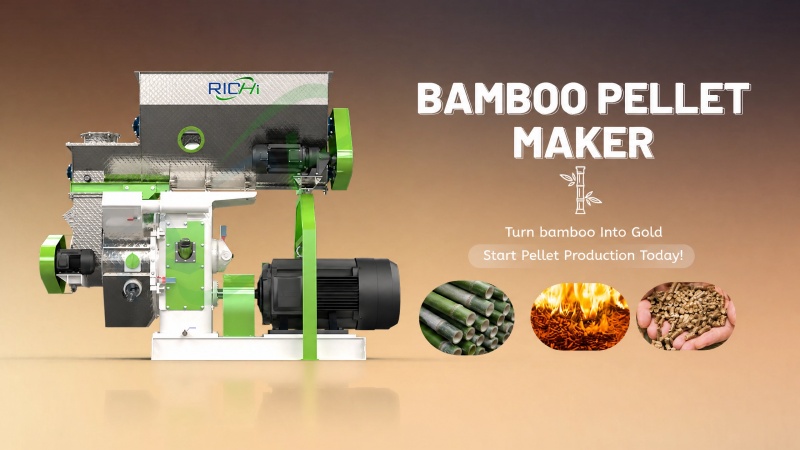
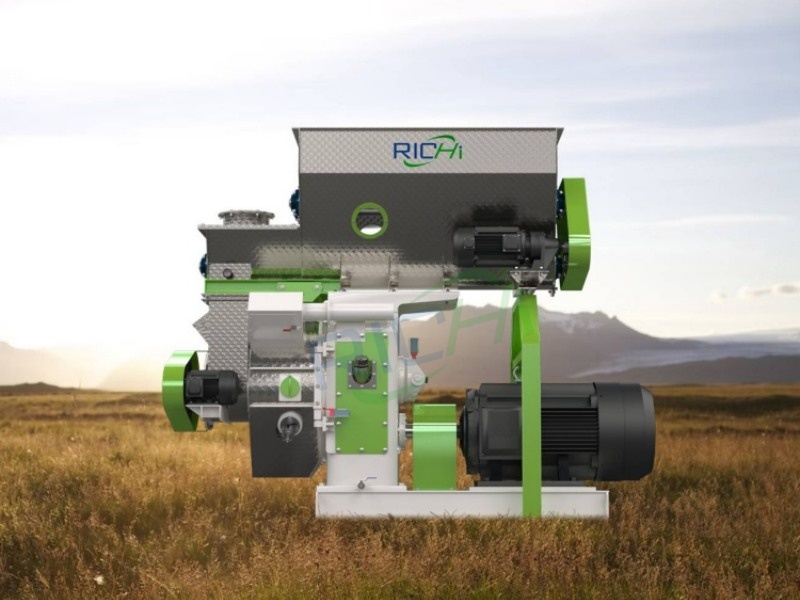
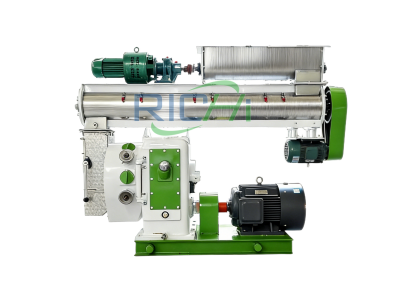
At the core of this transformation is the cassava pellet machine, which enables consistent densification of cassava-based materials into commercial-grade products.
However, what makes cassava pelletization particularly interesting is not just the machine itself—but the entire system engineering behind it.
Why Cassava Processing Is Becoming a Global Investment Opportunity
Agricultural investors are facing a common challenge worldwide: raw biomass has low and unstable value. Prices fluctuate, transportation costs are high, and storage losses are significant.
Cassava compounds this issue because:
- It has high moisture content after harvest
- It deteriorates quickly without processing
- It is bulky and expensive to transport
- Its by-products are often underutilized
Instead of treating these limitations as problems, modern agribusinesses are redesigning cassava into a controlled industrial input.
This shift is driving demand for integrated pellet systems such as the cassava pellet making machine, which allows producers to stabilize product quality and unlock higher-value markets.
The Engineering Logic Behind Cassava Pellet Production
Cassava pellet production is not a simple mechanical process—it is a controlled thermomechanical transformation.
A complete system typically includes:
- Raw material preprocessing
- Size reduction and grinding
- Moisture and steam conditioning
- High-pressure pellet formation
- Cooling and screening systems
- Packaging and storage units
Each stage plays a critical role in ensuring final product stability.
Inside the system, starch behavior is especially important. Under heat and pressure, cassava starch undergoes partial gelatinization, which acts as a natural binder. This eliminates the need for excessive additives and improves pellet strength.
This is why industrial buyers increasingly prefer pelletized cassava over raw or powdered forms.
Multi-Raw Material Flexibility in Modern Pellet Systems
One major evolution in pellet technology is multi-material compatibility.
Modern production lines are no longer designed for a single raw input. Instead, they are engineered for flexible biomass processing.
For example, the same production system used for cassava can often be adapted for other agricultural residues such as:
- Wood chips
- Straw
- Corn stalks
- Bagasse
- Hay materials
This flexibility increases return on investment significantly.
Some integrated factories even combine cassava processing with systems like a wood chip pellet machine for sale, allowing year-round production regardless of crop seasonality.
From Agricultural Waste to Industrial Commodity
One of the biggest misconceptions in agriculture is that by-products have little value. In reality, most agricultural residues contain significant energy and organic content.
Cassava residues are especially valuable because they can be converted into:
- Animal feed pellets
- Organic fertilizer pellets
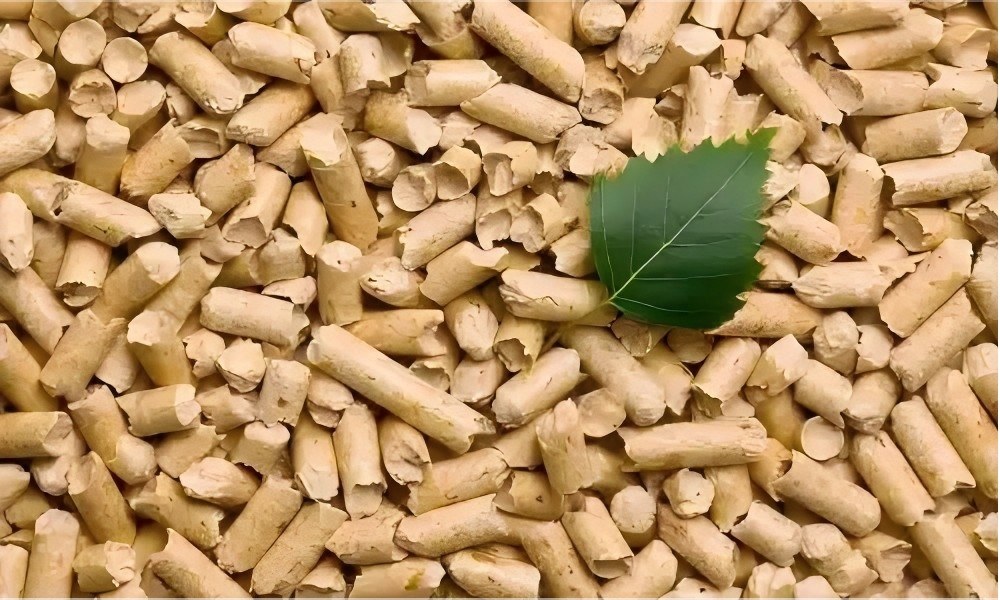
- Biomass fuel pellets
- Industrial starch-based products
However, without proper densification, these materials are difficult to commercialize.
Pelletization solves this by converting loose, unstable biomass into standardized industrial units.
In many large-scale operations, a pellet press is used as the core compression unit that defines product quality and structural integrity.
Industrial Feed Market Demand and Cassava Positioning
The global feed industry is expanding rapidly due to rising demand for meat, dairy, and aquaculture products.
Feed manufacturers require ingredients that are:
- Stable in storage
- Easy to transport
- Consistent in composition
- Compatible with automated systems
Cassava pellets meet these requirements effectively.
As a result, cassava is increasingly being used as an energy ingredient in compound feed formulations.
Many producers now evaluate complete systems instead of standalone machines, often comparing suppliers such as Richi manufacture when planning industrial-scale projects.
System Efficiency: Why Integration Matters More Than Machines
A common mistake in early-stage investments is focusing only on individual equipment.
In reality, pellet production success depends on system integration.
A fully optimized cassava pellet mill must work in harmony with:
- Feeding systems
- Grinding equipment
- Conditioning units
- Cooling systems
- Storage infrastructure
If any part of the system is unbalanced, overall performance declines.
For example:
- Poor grinding leads to uneven pellets
- Incorrect moisture causes weak structure
- Inadequate cooling reduces storage stability
This is why modern engineering focuses on complete production lines rather than isolated machines.
Energy Efficiency and Operational Cost Control
Energy consumption is one of the most important factors in pellet production economics.
Advanced systems are designed to:
- Reduce friction loss
- Optimize motor efficiency
- Control thermal input precisely
- Minimize unnecessary mechanical resistance
Over time, even small efficiency improvements can significantly impact operational profitability.
This is especially important in large-scale industrial systems where continuous production is required.
Quality Control and Standardization in Pellet Production
Global buyers demand consistent product quality.
Cassava pellet quality is typically evaluated based on:
- Density
- Durability
- Moisture stability
- Particle uniformity
- Ash content (depending on application)
Modern production systems use sensors and control systems to maintain these parameters within strict ranges.
Operators often rely on technical documentation and industrial resources such as explanation materials to understand process optimization techniques.
Market Expansion Strategies for Cassava Pellet Producers
Successful pellet businesses do not rely on a single market.
Instead, they diversify into multiple sectors:
Feed Industry
Poultry, cattle, and aquaculture feed markets.
Fertilizer Industry
Organic and compound fertilizer pellet products.
Energy Industry
Biomass fuel pellets for heating and industrial boilers.
Export Markets
Standardized pellets for international buyers.
This diversification reduces risk and stabilizes long-term revenue.
Digital Transformation in Pellet Industry
The pellet industry is increasingly adopting digital tools.
These include:
- Remote monitoring systems
- Predictive maintenance analytics
- Automated production control
- Real-time quality tracking
These technologies improve efficiency and reduce downtime.
Many industry professionals follow technical updates through resources like blog here, which provide insights into equipment innovation and system optimization.
Investment Considerations for New Projects
Before investing in a pellet production system, businesses typically evaluate:
- Raw material availability
- Energy costs
- Target market demand
- Equipment scalability
- Maintenance requirements
A well-designed system should be able to scale from small pilot production to full industrial output without major redesign.
Some investors also use external validation sources such as check my source when comparing technology suppliers and production strategies.
Future Outlook of Cassava-Based Pellet Systems
The future of cassava processing is strongly linked to industrial transformation and circular economy principles.
Key trends include:
- Full automation of production lines
- Integration with renewable energy systems
- Expansion into bio-based materials
- Increased export-oriented production
- Greater emphasis on waste utilization
Cassava will continue evolving from a traditional crop into a strategic industrial raw material.
Conclusion
Cassava pellet production is no longer a simple agricultural activity. It has become a structured industrial process involving engineering, energy management, system integration, and global supply chain strategy.
With the support of advanced systems such as the cassava pellet machine, agricultural businesses can transform low-value biomass into high-value industrial commodities.
As global demand for efficient, sustainable, and standardized materials continues to rise, cassava pellet systems are positioned to play a key role in the future of agricultural industrialization.
Related Post: https://pelletizerequipment.com/animal-feed-pellet-mill-for-sale/