



The biomass pellet industry continues to diversify its feedstock base, moving beyond traditional wood to include agricultural residues, grasses, and increasingly, bamboo. For equipment buyers, understanding the differences between a wood pellet machine and a bamboo pellet machine is essential for making the right investment decision.
Why Feedstock Type Determines Machine Design
Pellet machines operate on a common mechanical principle — compressing fine biomass particles through die holes under roller pressure. However, different feedstocks have fundamentally different physical and chemical properties that influence machine design, die specifications, and operational parameters.
Wood and bamboo differ in several critical ways:
- Silica content: Bamboo contains significantly higher silica levels than most wood species, dramatically increasing die and roller wear rates
- Fiber structure: Bamboo fibers are longer and more oriented than wood fibers, requiring higher compression ratios
- Lignin content: Bamboo has slightly lower lignin content than hardwoods, sometimes requiring longer conditioning or slightly higher moisture to achieve good pellet binding
These differences mean that a standard wood pellet die may perform poorly on bamboo feedstock, and a machine optimized for bamboo may be over-engineered for standard wood processing.
Wood Pellet Machine: Design Characteristics
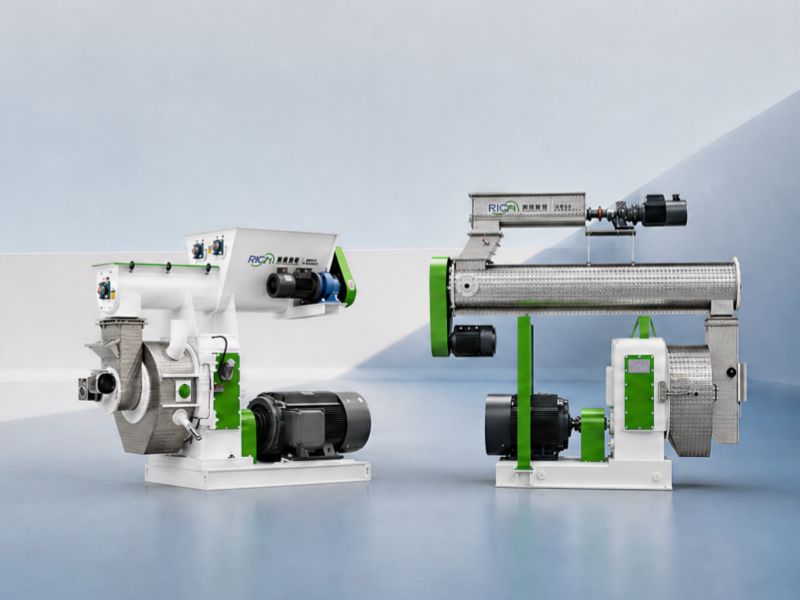
A standard wood pellet machine is designed around softwood and hardwood feedstocks. Key design features include:
- Die compression ratio: Typically 1:6 to 1:8, suitable for wood’s natural lignin binding
- Die hole diameter: 6 mm or 8 mm for standard fuel pellets
- Roller material: Alloy steel with standard hardness ratings
- Conditioning: Steam or water conditioning optional depending on feedstock moisture
Wood pellet machines are extremely well-established technology with a broad supplier base and abundant replacement part availability. For operations processing forest residues, sawmill waste, or plantation thinnings, they represent the lowest-risk equipment choice.
If you go to my blog sections covering pellet equipment specifications, you’ll find detailed comparison tables of compression ratios across wood species.
Bamboo Pellet Machine: Reinforced for Demanding Feedstock
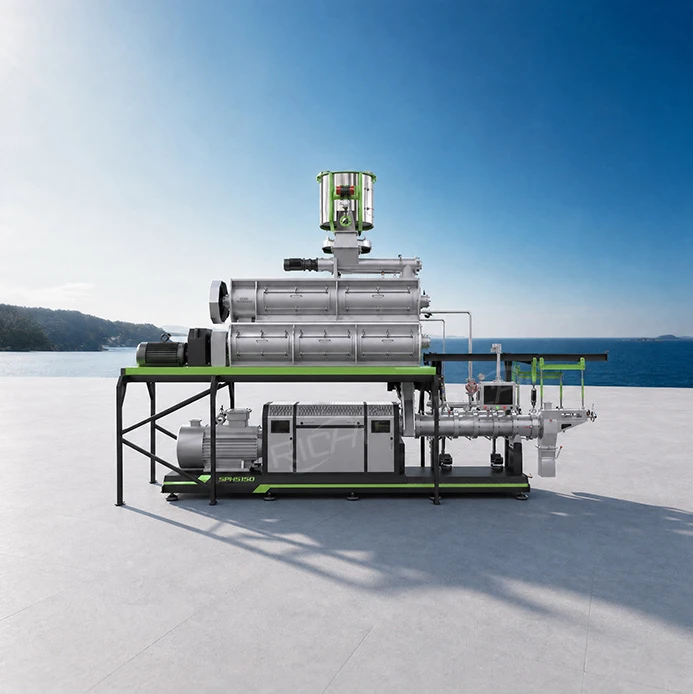
A dedicated bamboo pellet machine incorporates several design enhancements to handle bamboo’s challenging properties:
- Higher compression ratio dies: Typically 1:8 to 1:10, compensating for lower natural binding
- Tungsten carbide roller coating: Resists the abrasive silica in bamboo fiber
- Reinforced die plate: Heavier die construction extends service life under higher wear conditions
- Longer conditioning zone: Ensures thorough moisture distribution in bamboo’s dense fiber structure
These reinforcements add to initial machine cost but are essential for achieving acceptable die lifespan. Using a standard wood pellet die on bamboo feedstock can result in die replacement every 200–300 hours rather than the 800–1,200+ hours typical with wood.
Processing Bamboo: Pre-Treatment Considerations
Before bamboo enters the pellet machine, several pre-treatment steps are particularly important:
- Node removal — Bamboo nodes create inconsistent fiber density; crushing or splitting before chipping improves uniformity
- Fine grinding — Bamboo requires finer grinding than most wood species; 2–3 mm particle size improves pellet quality
- Moisture adjustment — Target 12–14% moisture content, slightly higher than wood, to compensate for lower lignin binding
Getting pre-treatment right is often more important than the pellet machine itself when working with bamboo feedstock.
Market Applications for Bamboo Pellets
Bamboo pellets are gaining traction in specific markets:
- Asia-Pacific industrial heating — where bamboo plantation resources are abundant
- Export to European ENplus markets — bamboo pellets can meet ENplus A1 standards with proper processing
- Co-firing with wood — blended pellets reduce production costs while maintaining quality standards
The bamboo pellet market remains smaller than wood pellet markets globally, but growth is accelerating as plantation bamboo resources expand in tropical and subtropical regions.
Choosing the Right Manufacturer
Whether processing wood or bamboo, selecting a manufacturer with genuine multi-feedstock engineering experience is critical. Richi machinery manufacture develops both wood and bamboo pellet equipment lines, with die and roller specifications tailored to specific feedstock types rather than applying generic configurations.
Summary
The choice between a wood pellet machine and a bamboo pellet machine comes down to feedstock composition, production volume, and acceptable maintenance cost. Bamboo demands more from the machine but offers competitive economic returns where raw material is abundant. Always work with a manufacturer who understands feedstock-specific engineering — generic pellet machines rarely perform optimally across both material types.